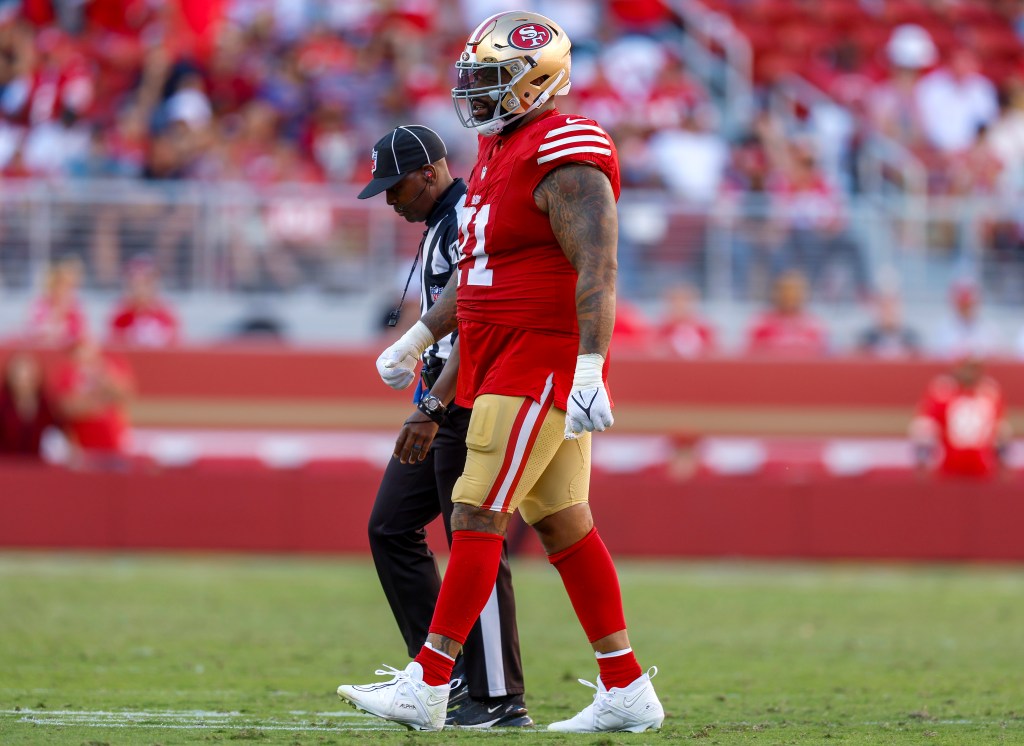
The San Francisco 49ers, a team that notched an impressive 13 wins in the 2025 season and consistently contends at the highest level, finds itself at a critical juncture. While championship aspirations remain high, a significant challenge looms large: the unresolved Trent Williams contract situation. The future of their cornerstone left tackle, a player universally acknowledged as one of the best in the NFL, is shrouded in uncertainty, presenting a complex dilemma that could shape the team's trajectory for years to come. This isn't merely a standard negotiation; it’s a high-stakes chess match involving age, elite performance, and a staggering $39 million cap hit.
The Unprecedented Value of a Veteran Left Tackle
Trent Williams is not just another name on the 49ers' star-studded roster; he is the anchor of their offensive line and arguably the most dominant left tackle in the game, even as he approaches 38 years old in July. His five All-Pro selections speak volumes about his consistent excellence. For an offense built around a powerful rushing attack and protecting a young quarterback like Brock Purdy, Williams’ presence is indispensable.
Consider his impact: Williams transforms routine running plays into explosive chunk gains, creating lanes that few other linemen can. More critically, he’s a human shield for Purdy, safeguarding the crucial blind side against the NFL's most ferocious pass rushers. The stability he provides on the left edge allows the offense to operate with confidence, knowing their quarterback has the time and space to execute plays. Losing such a vital piece or seeing instability at that position could severely hamper the 49ers' ability to compete with division rivals like the Rams and Seahawks, who boast formidable defensive fronts.
Even at an age where most offensive linemen begin to decline, Williams continues to outperform nearly every younger tackle in the league. His unique combination of athleticism, power, and technique sets him apart, making the prospect of replacing him an almost impossible task. This unparalleled performance late in his career is precisely what complicates his Trent Williams contract discussions, creating a situation with "unique circumstances," as General Manager John Lynch described it.
Navigating the $39 Million Elephant in the Room
The crux of the dilemma lies in the financial aspect of the Trent Williams contract. He is entering the final year of his current three-year, $82.7 million deal, which includes a colossal $38.8 million ($39 million rounded) cap hit for the 2026 season. Critically, there is no guaranteed money remaining on this deal, putting the 49ers in a tight spot. For a deeper dive into the immediate financial ramifications, read our article: Trent Williams Contract Crisis: 49ers Grapple With $39M Hit.
This $39 million figure is not merely large; it represents franchise-level money, tying up significant salary cap space that the front office desperately needs for future roster building. To put it in perspective, that amount could typically secure two solid starters or multiple key depth pieces. With several other crucial players eventually needing extensions and the team always looking to make strategic free-agent signings or trades, every dollar of cap space is vital. An unwieldy cap hit from one player, no matter how elite, can severely restrict a team's flexibility.
The 49ers' primary goal in these negotiations is clear: reduce that monstrous 2026 cap number. However, their options are limited and fraught with risk:
- Long-term Extension: Offer Williams more guaranteed money spread over additional years. This would lower the immediate cap hit by distributing it over a longer period. The risk here is committing significant future cap space to a player who could retire at any time or experience a sudden decline due to age.
- Play it Out: Allow Williams to play on his current deal and absorb the $39 million cap hit. This risks him walking in free agency after 2026 or, worse, a midseason performance drop-off or injury without future security. It also means sacrificing immediate cap flexibility.
- Restructure without Extension: Convert some of his 2026 salary into a bonus, pushing cap hits further into the future. This is a short-term fix that often creates larger cap issues down the road, akin to "kicking the can."
The decision impacts not just Williams, but the entire financial fabric of the 49ers' future roster construction.
The Leverage Game: Why Both Sides Are 'Struggling'
ESPN's Adam Schefter reported that talks between Williams and the Niners have stalled, with both sides "struggling" to find a path forward. This struggle highlights the delicate balance of leverage in the negotiation. On one hand, Williams holds significant power due to his unmatched performance and the critical role he plays. As John Lynch acknowledged, there's "no real Plan B" if Williams were to leave or significantly regress. The struggles of Austen Pleasants, a backup who performed well in one game but struggled significantly (39.6 PFF pass protection grade, three pressures allowed) in another start when Williams was injured, underscore the chasm between Williams and any potential replacement.
The 49ers are acutely aware that a rookie or journeyman simply won't cut it when facing elite pass rushers twice a year. The cost of replacing Williams, both in draft capital and the potential drop-off in production and quarterback safety, is astronomical. This gives Williams and his agent, Vincent Taylor, a strong hand.
However, the 49ers also have some leverage. Williams' age, 37 now and turning 38 soon, means any long-term guaranteed money carries substantial risk for the team. While he performs at an elite level, the cliff often comes suddenly for offensive linemen. Furthermore, Williams has expressed a desire to remain a Niner, and the team clearly wants to keep him, as evidenced by Lynch's optimistic statements about being "on the right track" with agent Vincent Taylor. For more on Lynch's perspective, see: John Lynch on Trent Williams Contract: 49ers 'On the Right Track'.
The "unique circumstances" Lynch alluded to likely pertain to threading the needle between rewarding an aging, all-time great and managing the severe cap implications for a team in a championship window. It’s a negotiation where neither side wants to blink, but both recognize the importance of a resolution.
Potential Outcomes and Strategic Pathways for the 49ers
The resolution of the Trent Williams contract could take several forms, each with distinct implications for the 49ers:
- A "Win-Win" Extension: The most ideal scenario involves a two-to-three-year extension that provides Williams with more guaranteed money and security while significantly lowering his 2026 cap hit. This could be achieved by converting some of his base salary into a signing bonus and spreading it out. The 49ers would need to be comfortable with the risk of guaranteeing money to an older player, but the trade-off for continued elite protection and cap relief might be worth it. This path maintains stability and allows for strategic cap planning.
- Playing Out the Final Year: If talks truly stall, the 49ers might be forced to let Williams play out 2026 on his current deal, absorbing the $39 million cap hit. While this offers no long-term security, it delays making a difficult decision. The risk is immense: Williams could retire, get injured, or walk away in free agency, leaving the 49ers scrambling for a replacement in 2027.
- A Trade (Less Likely): While Williams is an elite asset, trading an aging player with such a high cap hit, especially one so vital to the team's immediate success, seems highly improbable. The return would likely not compensate for the void he leaves, and it would signal a white flag on their championship window.
For the 49ers, the strategic pathway must prioritize maintaining their Super Bowl contention while safeguarding future financial health. A well-structured extension that reduces the immediate cap hit, even if it carries some future risk, seems the most logical compromise. It keeps their best offensive player in place, provides cap relief to address other roster needs, and allows them to continue pursuing a championship.
What Fans Should Watch For
Keep an eye on any movement before the season begins. A mid-season negotiation could be a distraction. General Manager John Lynch and Williams' agent Vincent Taylor will be working diligently behind the scenes. The fact that an option bonus of $10 million is owed to Williams on April 1st could serve as a soft deadline or a point of negotiation leverage. A resolution before the legal tampering window for NFL free agency opens in March could also signal a smoother path forward, clearing the air for other team moves.
The Trent Williams contract saga is more than just a financial dispute; it's a test of the 49ers' ability to balance immediate championship aspirations with long-term roster sustainability. Securing their future by threading the needle on this unique situation will be paramount to keeping their Super Bowl window wide open.