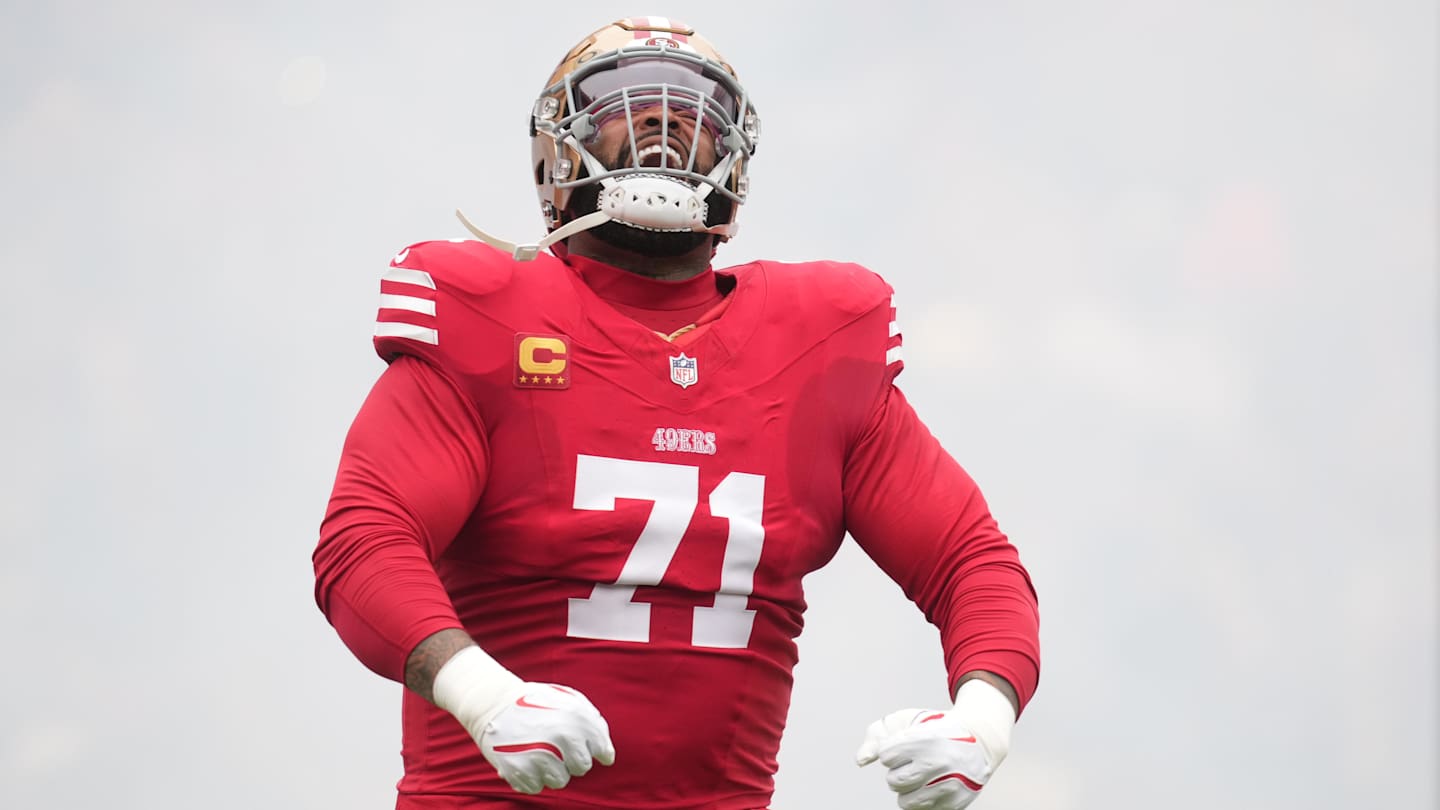
Trent Williams Contract Crisis: 49ers Grapple With $39M Hit
The San Francisco 49ers are a team on the cusp. After an impressive 13-win season in 2025, their ambitions for Super Bowl contention remain high. Yet, even with such recent success, challenges persist, particularly when facing formidable NFC West rivals like the Rams and Seahawks. Now, before they can fully plot their path to championship glory, the 49ers find themselves at a critical crossroads concerning their most indispensable offensive lineman: Trent Williams. The looming financial implications of the
Trent Williams contract for 2026, featuring a staggering $39 million cap hit, threaten to overshadow their aspirations and force the front office into a difficult balancing act.
The Unprecedented Challenge: $39 Million for a Legendary Left Tackle
Trent Williams isn't just another name on the roster; he's a living legend, a five-time All-Pro, and a twelve-time Pro Bowler who continues to perform at an elite level despite his age. At 37 (turning 38 in July), Williams is staring down the final year of his three-year, $82.7 million deal. The core issue? That agreement carries an eye-watering $38.8 million (often rounded to $39 million) cap hit for the 2026 season, with no guaranteed money remaining. For any team, especially one with Super Bowl ambitions and other roster needs, this figure is colossal.
What makes this situation particularly unique is Williams' sustained dominance. He consistently outperforms tackles many years his junior, making him an anomaly in a league where age often dictates decline. Yet, for the 49ers, this presents a monumental dilemma. Paying a player approaching 40 near-franchise quarterback money, even one of Williams' caliber, represents a significant risk. It's not just about the current cap hit; it's about the potential long-term commitment and the inherent uncertainty of a player's performance from one year to the next at that age. The $39 million ties up an immense portion of their salary cap, severely limiting the front office's flexibility to sign other key free agents, extend budding stars, or make strategic trades to bolster the roster.
Trent Williams: The Linchpin of the 49ers Offense
To understand the gravity of the
Trent Williams contract situation, one must fully appreciate his profound impact on the 49ers' offense. Williams isn't merely a left tackle; he is the foundation upon which much of San Francisco's offensive success is built. His unparalleled ability to seal the edge, create running lanes, and consistently win one-on-one battles transforms ordinary running plays into explosive chunk gains, which is a hallmark of the 49ers' Kyle Shanahan-led scheme.
More critically, Williams is the primary protector for quarterback Brock Purdy's blindside. In a league where quarterback safety is paramount, having an elite left tackle like Williams keeps Purdy upright, allowing him crucial extra seconds to read defenses and deliver passes. The absence of such a stalwart presence could lead to significant instability on the left edge—the worst possible scenario for a young quarterback's development and confidence.
The 49ers experienced a glimpse of this vulnerability in 2025 when Williams suffered a hamstring injury against the Chicago Bears. While Austen Pleasants showed flashes, his subsequent struggles, particularly a dismal 39.6 pass protection grade from Pro Football Focus against the Seahawks in Week 18, underscored Williams' irreplaceable value. The thought of starting over at left tackle with a rookie or a journeyman, especially when facing elite pass rushers like Aaron Donald twice a year, sends shivers down the spine of any 49ers fan. Williams returned for the playoff games, reaffirming his importance by anchoring the line when it mattered most.
Navigating the Negotiation: Lynch's Optimism Amidst "Unique Circumstances"
The responsibility for threading this complex needle falls to 49ers General Manager John Lynch. Speaking at the NFL Scouting Combine, Lynch expressed optimism regarding a resolution to the
Trent Williams contract talks, stating, "
I think we’re on the right track." He confirmed "good and productive" meetings with Williams' agent, Vincent Taylor, and reiterated the team's desire to keep Williams, a sentiment echoed by Williams himself who "loves being a Niner."
However, Lynch also acknowledged the "unique circumstances" surrounding the negotiation. These circumstances include Williams' age, his elite performance, the massive existing cap hit, and the team's undeniable lack of a viable "Plan B" at left tackle. The 49ers' primary goal is to reduce that $38.8 million cap number for 2026, likely by extending Williams' contract and spreading out the financial burden over more years. This strategy could lower his immediate cap hit but potentially create a "cap sinkhole" further down the line, a risk the team must carefully weigh.
A critical date in these negotiations is April 1, when Williams is due a $10 million option bonus. This payment could serve as a trigger point for accelerated talks or a moment of increased tension if a deal isn't close. The legal tampering window for NFL free agency opens even earlier, on March 9, adding another layer of urgency as teams begin to solidify their rosters. While Lynch projects "a great deal of confidence" about getting a deal done, the delicate balance between financial prudence and retaining an unparalleled talent makes this one of the most challenging negotiations facing the 49ers' front office.
What's At Stake for the 49ers' Future?
The resolution of the
Trent Williams contract isn't just about one player's salary; it has profound implications for the 49ers' competitive window and their immediate future. If the 49ers cannot successfully renegotiate, they face several daunting scenarios:
- Playing it out: Williams plays the 2026 season on his current deal. While this temporarily defers the decision, it doesn't solve the cap problem and risks Williams walking away as a free agent in 2027, potentially leaving the team with nothing to show for the enormous cap hit.
- Midseason Drop-off or Walkout: The psychological toll of an unresolved contract could affect performance, or Williams might consider a midseason holdout if frustrations mount, though this is less likely given his professionalism.
- Forced Rebuild at Left Tackle: If Williams departs, the 49ers would be forced to find a replacement, likely through the draft or free agency. As highlighted by Austen Pleasants' struggles, finding an immediate, elite replacement is incredibly difficult and often takes years, potentially derailing Super Bowl aspirations. As one analysis noted, "ers' Trent Williams Dilemma: Age, $39M Cap, and No Plan B."
The stakes are incredibly high. For a team that sees itself as a perennial Super Bowl contender, maintaining stability and elite talent at critical positions is non-negotiable. Losing Williams or having his contract situation unresolved could significantly impact team morale, the development of young players like Purdy, and their ability to keep pace with divisional powerhouses. The decision on Williams will send a clear message about the 49ers' strategy for maintaining their championship window.
Conclusion
The
Trent Williams contract negotiations represent perhaps the most significant immediate challenge for the San Francisco 49ers. While General Manager John Lynch remains optimistic, the unique confluence of Williams' age, unparalleled performance, the staggering $39 million cap hit, and the team's lack of an obvious alternative creates a truly precarious situation. Finding a path forward that honors Williams' legendary status while maintaining financial flexibility is a tightrope walk that will ultimately define the 49ers' immediate competitive trajectory. How they "thread that needle" will not only impact their salary cap for years to come but also their ability to finally hoist the Lombardi Trophy.